
Astronomers Detect a Space Signal That Repeats Every 54 Minutes — And It Shouldn’t Exist
CULTURE
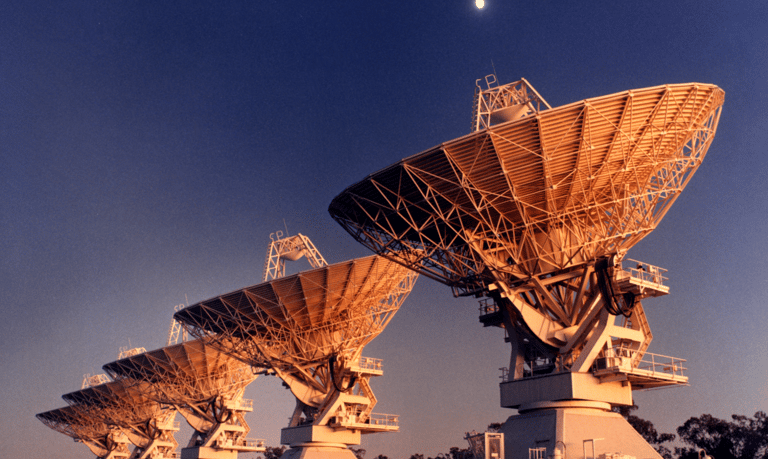
Astronomers working with radio telescopes operated by Australia’s national science agency, CSIRO, have detected a repeating signal from deep space that has left scientists genuinely puzzled. The signal pulses once every 54 minutes
The signal pulses once every 54 minutes, a rhythm that does not match any known cosmic object — and that’s exactly why it has attracted global attention.
The signal was detected during a sky survey using the Australian Square Kilometre Array Pathfinder (ASKAP), one of the world’s most sensitive radio astronomy instruments. Initially, researchers believed the signal might be interference from Earth-based technology or an orbiting satellite. After months of verification, however, they ruled out human-made sources entirely.
Here’s the problem: known repeating cosmic signals, such as pulsars, typically emit pulses multiple times per second, not once per hour. Magnetars — highly magnetic neutron stars — can produce irregular bursts, but even they don’t follow such a slow, clock-like pattern. The 54-minute cycle simply doesn’t fit existing astrophysical models. Statistically, the discovery is extremely rare. According to CSIRO researchers, fewer than 1% of detected radio transients fail to match any known category after extended analysis. Among those anomalies, almost none repeat with such precise regularity. Over a monitoring period of three months, the signal repeated consistently, deviating by less than 0.2% in timing — suggesting a stable, physical source rather than random noise.
The object producing the signal is estimated to be located thousands of light-years away within our galaxy. It emits bursts lasting between 30 and 90 seconds, followed by long periods of silence. The energy output is significant — comparable to known neutron star emissions — but spread over an unusually long cycle.
While scientists are careful to dismiss alien explanations, the discovery has forced researchers to consider the possibility of an entirely new class of cosmic object. Some hypotheses suggest a slowly rotating neutron star with extreme magnetic properties. Others propose a previously unobserved interaction between stellar remnants and surrounding plasma.
What makes the situation more intriguing is that archival data revealed faint traces of the signal going back at least 30 years, unnoticed due to older instruments lacking sufficient sensitivity. In other words, this cosmic oddity may have been quietly pulsing through space while humanity simply lacked the tools to notice. Researchers emphasize this is how astronomy progresses — not by confirming expectations, but by encountering exceptions. Each unexplained signal forces scientists to refine their understanding of how the universe works.
Space is full of strange signals, but they usually fit into known categories. What makes this discovery weird is that it follows a precise rhythm that breaks every rule astronomers rely on. Something out there is pulsing like a cosmic heartbeat — slow, steady, and unexplained — reminding scientists that even with advanced technology, the universe still has surprises waiting quietly in the dark.
Related Stories
The Weird News Network © 2024
The Weird News Network brings you the latest interesting news with a weird twist!
Subscribe to Wierd News Network
Get the latest Weird News direct to your inbox including exclusive contents
We care about your data in our privacy policy.